
How Is NGS Analysis Performed? Complete NGS Workflow
NGS Analysis Is More Than Just Sequencing
Next-generation sequencing (NGS) refers to a group of high-throughput sequencing technologies that enable the simultaneous sequencing of large numbers of DNA or RNA molecules. However, NGS analysis is not simply a matter of reading DNA sequences from a sequencing instrument.
A complete NGS workflow consists of multiple interconnected stages:
sample → nucleic acid extraction → quality control → library preparation → sequencing → raw data QC → trimming → alignment → BAM/CRAM generation → variant calling → variant filtering → annotation → biological/clinical interpretation → reporting
Illumina’s fundamental NGS workflow similarly separates nucleic acid extraction, library preparation, sequencing, and downstream bioinformatics analysis into distinct stages. (illumina.com)
The most important point is this:
A good NGS analysis is not simply about finding a large number of variants; it is about identifying reliable, reproducible, and biologically meaningful variants.
For example, a whole-exome sequencing (WES) experiment may generate millions of reads. However, the actual requirement of a researcher or clinician is often not to examine every read, but to identify a small number of variants that may be relevant to the patient’s phenotype.
Therefore, a robust NGS analysis should answer three fundamental questions:
- Is the data of sufficient quality?
- Is the identified variant real?
- What is the biological or clinical significance of that variant?
Defining the Purpose of the NGS Analysis
The first step in an NGS project is actually not bioinformatics.
The biological or clinical question must be clearly defined first.
The analysis pipeline, sample type, sequencing strategy, and variant types of interest all depend on the research question.
Common NGS applications include:
- Targeted gene panels
- Whole Exome Sequencing (WES)
- Whole Genome Sequencing (WGS)
- RNA sequencing (RNA-seq)
- Somatic cancer analysis
- Germline variant analysis
- Hereditary disease analysis
- Carrier screening
- Pharmacogenomics
- CNV analysis
- Structural variant analysis
- Mitochondrial DNA analysis
- Metagenomics
For example, in a hereditary disease investigation, germline SNV and indel analysis may be the primary focus.
In cancer genomics, somatic SNVs/indels, CNVs, and structural variants may all need to be evaluated, together with factors such as tumor purity and variant allele frequency.
In RNA-seq, simply looking for DNA variants is insufficient; gene expression, alternative splicing, and fusion detection may be required.
Therefore, the term “NGS analysis” does not refer to a single universal pipeline.
Sample Collection and Nucleic Acid Extraction
The first laboratory stage of an NGS workflow is the extraction of DNA or RNA from the biological sample.
The sample may originate from:
- Blood
- Tumor tissue
- Normal tissue
- Saliva
- Biopsy material
- FFPE tissue
- Cultured cells
- Plasma
- Microbial samples
The objective of extraction is not simply to obtain DNA or RNA. The quantity, purity, and integrity of the resulting nucleic acid can directly influence subsequent stages.
For example, poor-quality DNA can lead to:
- Low library yield
- Uneven coverage
- Target-region dropout
- Low mapping rates
- Incorrect variant calling
Illumina recommends assessing nucleic acid quantity and purity after extraction, with fluorometric and spectrophotometric approaches used depending on the workflow. (illumina.com)
DNA/RNA Quality Control
An important principle in NGS analysis is:
“Garbage in, garbage out.”
If the starting material is poor quality, even a highly sophisticated bioinformatics pipeline cannot completely compensate for the problem.
During DNA/RNA QC, several parameters may be assessed.
DNA Quantity
DNA concentration is commonly measured using fluorometric methods.
Examples include:
- Qubit
- Other fluorometric quantification systems
Purity
Spectrophotometric measurements may include:
- A260/A280
- A260/A230
However, spectrophotometric concentration alone should not be used to determine whether DNA is suitable for NGS.
Integrity
DNA/RNA integrity is particularly important for:
- WGS
- WES
- RNA-seq
- FFPE samples
Fragmented material can affect:
- Library size distribution
- Coverage uniformity
- Sequencing performance
Library Preparation
Genomic DNA is generally not loaded directly onto an NGS instrument.
DNA or RNA must first be converted into a sequencing library.
Depending on the workflow, library preparation may involve:
- Preparing or fragmenting DNA
- Selecting target regions
- End repair
- Adapter ligation
- Index/barcode addition
- PCR amplification when required
- Library cleanup
- Library quantification and size assessment
The appropriate library preparation strategy depends on the sequencing application.
For example, the objective of WES is not to sequence the entire genome but to enrich for protein-coding regions.
In a targeted panel, specific genes or genomic regions are selected.
Library quality is therefore a critical quality-control point before sequencing even begins. Illumina emphasizes that library quantification and QC methods should be selected according to the specific library preparation kit and workflow. (knowledge.illumina.com)
Indexing and Multiplexing
Multiple samples can be sequenced in the same sequencing run.
This is achieved by assigning different index or barcode sequences to individual libraries.
For example:
- Sample A → Index 01
- Sample B → Index 02
- Sample C → Index 03
The sequencing instrument processes these libraries together.
During bioinformatics processing, demultiplexing is then used to assign reads back to their respective samples.
This allows sequencing capacity to be used more efficiently.
However, index design and index-read quality are important. Incorrect sample assignment can result in serious bioinformatics and clinical consequences.
Sequencing: Reading the DNA
Once the sequencing library has been prepared, sequencing is performed.
Different sequencing technologies are available depending on the platform.
For example, Illumina platforms use Sequencing by Synthesis (SBS) as their core sequencing technology. During this process, nucleotides incorporated during DNA synthesis are detected to determine the sequence. (illumina.com)
Several concepts are particularly important during sequencing.
Read Length
Read length refers to the number of bases contained in an individual read.
Examples include:
- 75 bp
- 100 bp
- 150 bp
- 250 bp
Single-End and Paired-End Sequencing
In single-end sequencing, the DNA fragment is read from one end.
In paired-end sequencing, both ends of the fragment are sequenced:
R1 + R2
Paired-end sequencing can provide advantages for:
- Indel detection
- Genomic alignment
- Structural variant detection
- Repetitive regions
Sequencing Depth
Sequencing depth describes how many times a genomic region has been read.
For example, if a genomic region has:
100× coverage
it means that, on average, approximately 100 reads cover that region.
However, average depth does not mean that every base has exactly the same depth.
Raw Sequencing Data: FASTQ Files
One of the primary output formats from sequencing instruments is FASTQ.
FASTQ records generally contain:
- Read identifier
- Nucleotide sequence
- Separator
- Quality score
For example:
@READ001
ACGTGCTAGCTAGCTAGCTA
+
IIIIIIIIIIIIIIIIIIII
The quality score represents the estimated confidence associated with each base call.
Most NGS bioinformatics pipelines begin with FASTQ files.
Raw Data Quality Control
The first major bioinformatics stage is raw read QC.
The objective at this stage is not yet to identify variants, but to determine whether the sequencing data is suitable for downstream analysis.
One widely used tool is FastQC.
FastQC performs quality-control checks on high-throughput sequencing data and reports metrics such as quality scores, sequence composition, duplication, and overrepresented sequences. (bioinformatics.babraham.ac.uk)
Key QC Parameters
Per-Base Sequence Quality
This shows the distribution of base quality at each position across the reads.
If quality consistently decreases toward the end of reads, trimming may be considered.
Per-Sequence Quality Scores
This represents the overall quality distribution across reads.
GC Content
A substantial deviation from the expected GC distribution may indicate:
- Sample-specific characteristics
- PCR bias
- Contamination
- Target enrichment effects
Adapter Contamination
If sequencing reads extend into adapter sequences, adapter trimming may be necessary.
Sequence Duplication
High duplication may result from:
- PCR amplification
- Low library complexity
- Targeted sequencing
Therefore, high duplication does not automatically mean that the dataset is poor quality. It must be interpreted in the context of the sequencing design.
Adapter and Quality Trimming
Raw FASTQ data may undergo trimming when necessary.
The objectives may include:
- Removing adapter sequences
- Removing very low-quality bases at read ends
- Removing excessively short reads
- Improving downstream analysis performance
Commonly used tools include:
- Cutadapt
- Trimmomatic
- fastp
However, trimming should not be performed excessively or blindly.
Over-trimming can:
- Unnecessarily shorten reads
- Affect alignment performance
- Reduce support for certain genuine variants
Therefore, trimming parameters should be selected according to the sequencing platform and analytical objective.
Alignment to the Reference Genome
After quality control, sequencing reads are aligned to a reference genome.
For human genomic analysis, reference assemblies such as:
- GRCh37/hg19
- GRCh38
may be used.
The purpose of alignment is to determine the most likely genomic location of each read.
Commonly used alignment tools include members of the BWA family, such as:
BWA-MEM / BWA-MEM2
The resulting alignment data is commonly stored in SAM, BAM, or CRAM format.
SAM, BAM, and CRAM
SAM
SAM stands for Sequence Alignment/Map format.
It is a text-based alignment format that can be read by humans.
BAM
BAM is the compressed binary representation of SAM.
It is more practical for handling large genomic datasets.
CRAM
CRAM is an alternative to BAM that can provide greater compression efficiency.
A typical transformation in an NGS workflow is:
FASTQ → BAM/CRAM
Alignment Quality Control
After alignment, the existence of a BAM or CRAM file does not mean that the analysis has been successful.
Alignment QC is essential.
Important metrics include:
- Mapping rate
- Properly paired reads
- Duplicate reads
- Insert size
- Coverage
- Mean depth
- Coverage uniformity
- On-target rate
- Fold enrichment
- Mismatch rate
For example:
Mapping rate = 98%
may generally be considered a positive indicator.
However, for targeted sequencing, the on-target rate and coverage distribution across target regions are also important.
Duplicate Reads
During library preparation or PCR amplification, multiple reads originating from the same original molecule may be observed.
Duplicate marking is therefore important in many analytical workflows.
Common tools include:
- Picard MarkDuplicates
- samtools markdup
However, duplicate rate should not automatically be interpreted as a quality failure.
For example, targeted sequencing can naturally produce high duplication because specific genomic regions are intentionally enriched.
Therefore:
QC metrics must be interpreted in the context of the experimental design.
Coverage Analysis
Coverage is one of the most important QC metrics in NGS analysis.
It describes how many sequencing reads cover a genomic region.
However, reporting only:
Mean depth = 100×
is not sufficient.
More informative questions include:
- What percentage of bases are ≥10×?
- What percentage are ≥20×?
- What percentage are ≥30×?
- How many targets are ≥50×?
- How uniform is the coverage?
- Are clinically important genes adequately covered?
For example, an exome may have high mean coverage while some exons remain insufficiently covered.
Therefore:
High mean coverage → the analysis is definitely successful
is not a valid conclusion.
Base Quality and Mapping Quality
Two different concepts of sequencing quality should be distinguished.
Base Quality — BQ
Base quality reflects the estimated probability that a base has been called correctly.
Phred-based quality scores are commonly used.
Approximately:
Q20 ≈ 99% accuracy
Q30 ≈ 99.9% accuracy
Mapping Quality — MAPQ
Mapping quality reflects confidence in the genomic location assigned to a read.
Therefore:
high base quality ≠ high mapping quality
A read can have excellent base quality but low mapping quality if it aligns equally well to multiple regions of the genome.
Variant Calling
After alignment, the workflow moves into variant discovery.
Major variant classes include:
SNV
Single-nucleotide variants.
For example:
A → G
Indels
Small insertions and deletions.
CNVs
Copy Number Variations represent changes in the number of copies of a genomic region.
Structural Variants
Larger genomic alterations such as:
- Deletions
- Duplications
- Inversions
- Translocations
Different variant classes may require different callers and analytical approaches.
Germline Variant Calling
Germline analysis aims to identify variants present in an individual’s inherited genome.
GATK’s germline short-variant workflow is a widely used approach for SNV and indel discovery. The GATK documentation describes HaplotypeCaller, gVCF generation, and cohort-based joint calling in detail. (gatk.broadinstitute.org)
A simplified workflow can be represented as:
FASTQ → QC → Alignment → BAM → HaplotypeCaller → gVCF → GenotypeGVCFs → VCF
Why Is Joint Calling Important?
When analyzing multiple samples, it may be preferable to use joint genotyping rather than treating every sample as a completely independent analysis.
GATK Best Practices describe the use of cohort information to improve consistency and genotype evaluation in germline short-variant analysis. (gatk.broadinstitute.org)
Potential advantages include:
- Improved genotyping
- Better evaluation of low-frequency alleles
- More consistent results across samples
- Better scalability for large cohorts
Somatic Variant Calling
Cancer genomics requires a different analytical approach.
The goal is generally to identify somatic variants that have arisen in tumor cells.
Ideally, analysis includes:
Tumor sample + matched normal sample
This can help with:
- Separating germline variants
- Identifying true somatic variants
- Reducing sequencing artifacts
Somatic analysis may also evaluate:
- VAF (Variant Allele Frequency)
- Tumor purity
- Copy number
- Allele-specific events
- MSI
- TMB
Variant Filtering
Not every variant produced by a variant caller is necessarily real or clinically meaningful.
Filtering is therefore required.
Potential filtering parameters include:
- DP
- GQ
- QUAL
- VAF
- Allele balance
- Strand bias
- Mapping quality
- Base quality
However, filter thresholds should not be identical for every project.
The filtering strategy for a WGS experiment is not necessarily appropriate for a low-input tumor sample.
GATK’s germline workflows use sensitivity-oriented variant calling followed by appropriate filtering strategies. (gatk.broadinstitute.org)
Variant Annotation
Once a variant has been identified, the key biological question becomes:
“What does this variant mean?”
Variant annotation adds information such as:
- Gene
- Transcript
- Exon
- Protein change
- Variant consequence
- Population frequency
- Known disease association
- Literature evidence
- Clinical classification
A commonly used annotation tool is the Ensembl Variant Effect Predictor (VEP).
VEP can predict the effects of variants, including SNVs, indels, CNVs, and structural variants, on genes, transcripts, proteins, and regulatory regions. (jun2026-metazoa.ensembl.org)
What Is Variant Consequence?
Variant consequence describes the predicted molecular effect of a variant on a gene or transcript.
Examples include:
- synonymous_variant
- missense_variant
- stop_gained
- frameshift_variant
- splice_donor_variant
- splice_acceptor_variant
- start_lost
- stop_lost
- intronic_variant
- regulatory_region_variant
For example:
Gene: BRCA1
Variant: c.5266dupC
Consequence: frameshift
This indicates not only that a variant exists, but also its predicted molecular effect on the relevant transcript.
Why Is Transcript Selection Important?
The same genomic variant can produce different consequences in different transcripts.
Therefore, clinical reporting should document:
- Transcript
- Transcript version
- Genome build
- HGVS nomenclature
For example:
GRCh37 and GRCh38 coordinates are not interchangeable.
The same variant can have different genomic coordinates in different reference assemblies.
Therefore, a clinical NGS pipeline should not store only a genomic position.
Population Frequency Filtering
In rare disease analysis, evaluating the population frequency of a variant is an important step.
Resources such as:
- gnomAD
- 1000 Genomes
- dbSNP
can be used.
The general principle is:
A very common variant is less likely to explain a rare Mendelian disorder.
However, this is not an absolute rule.
Penetrance, founder effects, population structure, and inheritance patterns must also be considered.
Clinical Interpretation with ClinVar
ClinVar is an important NCBI resource that archives submitted clinical interpretations of human genomic variants in relation to diseases and drug responses. It contains submissions from different contributors together with information about their evidence and classifications. (ncbi.nlm.nih.gov)
A variant may be classified in ClinVar as:
- Pathogenic
- Likely pathogenic
- Uncertain significance
- Likely benign
- Benign
However, an important distinction must be made:
The presence of a variant in ClinVar does not mean that ClinVar independently validated its clinical significance.
ClinVar archives interpretations submitted by different contributors. Therefore, review status, submitter, condition, evidence, and potential conflicts should be evaluated. (ncbi.nlm.nih.gov)
Germline Variant Interpretation with ACMG/AMP
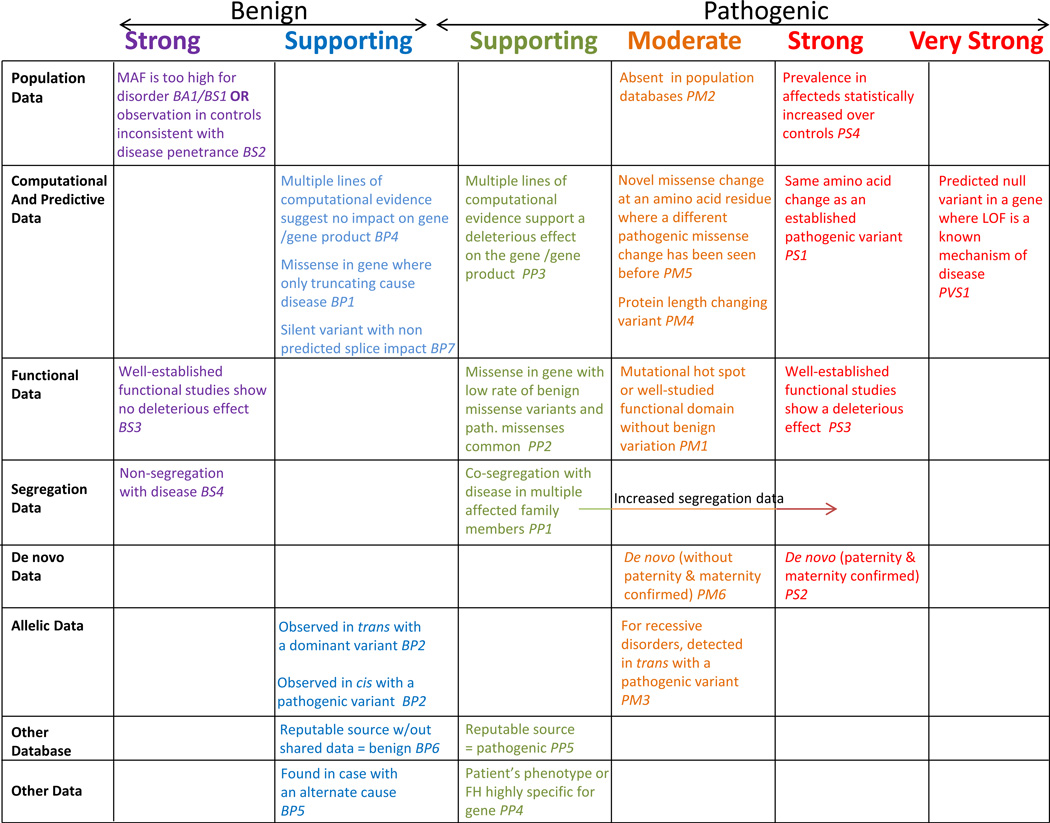
One of the most important international standards for clinical germline variant interpretation is the ACMG/AMP 2015 guideline.
The framework classifies variants into five major categories:
- Pathogenic
- Likely Pathogenic
- Variant of Uncertain Significance (VUS)
- Likely Benign
- Benign
Classification is based on the combined assessment of evidence such as:
- Population data
- Computational evidence
- Functional evidence
- Segregation
- Allelic data
- Disease mechanism
Therefore:
“The variant is rare → therefore it is pathogenic”
is not scientifically valid.
Rarity can support specific evidence criteria under defined circumstances, but it cannot independently establish pathogenicity.
Why Is ClinGen Important?
ACMG/AMP provides a general framework.
However, individual genes and diseases may require more specific rules.
ClinGen develops gene-, disease-, and criterion-specific recommendations to support more consistent application of ACMG/AMP criteria. Its guidance includes detailed recommendations for criteria such as PVS1, PM2, PM3, PP1, and PP3. (clinicalgenome.org)
Therefore, modern clinical variant interpretation should not rely solely on an old, generic ACMG checklist. Where applicable, current ClinGen expert recommendations should also be considered.
Where Does Phenotype Information Fit into the Analysis?
One of the most frequently overlooked components of NGS analysis is the patient’s phenotype.
A WES analysis can produce:
10,000 variants
or more.
Reviewing all of them manually is impractical.
Information such as:
- Clinical findings
- Age
- Age of onset
- Laboratory findings
- Family history
- Inheritance pattern
- HPO terms
can be used to prioritize variants.
Phenotype-driven analysis can connect a patient’s observed characteristics with genes and diseases associated with those phenotypes.
This is why modern NGS interpretation is increasingly becoming phenotype-aware, rather than purely variant-centric.
Variant Prioritization
Variant filtering and variant prioritization are not the same thing.
Filtering
Filtering removes variants that are unsuitable for further consideration.
For example:
- Very low-quality variants
- Extremely common population variants
- Variants outside the analytical scope
- Technically unreliable calls
may be removed.
Prioritization
Prioritization ranks the remaining variants according to their biological or clinical relevance.
For example:
Phenotype match + rarity + gene-disease relationship + variant consequence + clinical evidence
can be combined to rank candidate variants.
CNV Analysis
NGS is not limited to SNV and small-indel detection.
Coverage-based approaches can also be used to identify Copy Number Variations.
Examples include:
- Exon deletions
- Exon duplications
- Gene-level deletions
- Amplifications
CNV analysis, however, requires different statistical and computational approaches from conventional SNV calling.
GATK’s germline CNV workflow includes processes such as contig-ploidy determination, interval copy-number modeling, and CNV post-processing. (gatk.broadinstitute.org)
CNV findings may require additional confirmation before being incorporated into a clinical report, depending on the laboratory’s validated workflow and the specific finding.
Structural Variants
Some genomic alterations cannot be reliably detected by conventional short-read SNV callers.
Examples include:
- Large deletions
- Duplications
- Inversions
- Translocations
- Certain repeat expansions
Comprehensive WGS analysis may therefore require dedicated structural variant pipelines.
A single variant caller cannot reliably detect every possible class of genomic variation.
Why Is RNA-seq Analysis Different?
RNA-seq requires a different workflow from DNA-based germline analysis.
A simplified RNA-seq workflow may look like:
RNA → QC → trimming → alignment/pseudoalignment → transcript quantification → differential expression / splicing / fusion analysis
RNA-seq can be used to investigate:
- Gene expression
- Transcript abundance
- Alternative splicing
- Fusion transcripts
- Allele-specific expression
Therefore, when referring to “NGS analysis,” the underlying data type should always be specified.
NGS Analysis File Types
A typical germline WES/WGS pipeline may use the following file types:
| Stage | File |
|---|---|
| Sequencing | FASTQ |
| Raw QC | HTML / JSON / TXT |
| Alignment | SAM |
| Compressed alignment | BAM / CRAM |
| Index | BAI / CRAI |
| Variant calling | gVCF / VCF |
| Annotation | Annotated VCF / TSV |
| Coverage | BED / TSV / HTML |
| Final result | PDF / HTML / JSON / VCF |
Each file type has a different purpose.
For example, FASTQ represents raw sequencing reads, whereas VCF is commonly used to store genomic variant information in a standardized format.
An Example Germline WES Pipeline
A practical WES workflow can be represented as:
Patient Sample
    ↓
DNA Extraction
    ↓
DNA QC
    ↓
Library Preparation
    ↓
Target Enrichment
    ↓
Sequencing
    ↓
FASTQ
    ↓
Raw Read QC
    ↓
Adapter / Quality Trimming
    ↓
Alignment
    ↓
BAM / CRAM
    ↓
Alignment QC
    ↓
Duplicate Marking
    ↓
Base Quality / Alignment Processing
    ↓
Variant Calling
    ↓
gVCF / VCF
    ↓
Variant Filtering
    ↓
Variant Annotation
    ↓
Population Frequency
    ↓
ClinVar / ClinGen / Literature
    ↓
Phenotype Matching
    ↓
ACMG/AMP Interpretation
    ↓
Candidate Variants
    ↓
Expert Review
    ↓
Clinical / Research Report
GATK Best Practices similarly define separate workflows for data preprocessing, germline analysis, somatic analysis, and other variant discovery scenarios. (gatk.broadinstitute.org)
Where Should QC Be Performed in an NGS Workflow?
Quality control should not be limited to FASTQ files.
A well-designed pipeline performs QC at multiple levels.
Pre-Analytical QC
- Sample identity
- Sample type
- DNA/RNA quantity
- Purity
- Integrity
Library QC
- Library concentration
- Fragment size
- Library complexity
Sequencing QC
- Q20/Q30
- Yield
- Cluster density
- Read quality
Raw Data QC
- Adapter content
- GC content
- Duplication
- Per-base quality
Alignment QC
- Mapping rate
- Coverage
- Insert size
- Duplicate rate
Variant QC
- DP
- GQ
- QUAL
- VAF
- Allele balance
- Strand bias
Interpretation QC
- Transcript
- Genome build
- Database version
- Evidence
- Classification
This layered QC approach makes it easier to identify where a problem occurred in the workflow.
Reproducibility: The Same Analysis Should Be Reproducible
Reproducibility is critical in clinical and research NGS analysis.
The following should be recorded:
- Tool versions
- Reference genome
- Annotation database versions
- Command-line parameters
- Pipeline version
- Filtering thresholds
For example:
Reference: GRCh38
Variant Caller: GATK 4.x
Annotation: VEP x.x
ClinVar Release: YYYY-MM
gnomAD Release: vX
Pipeline Version: X.Y
Without this information, rerunning the same FASTQ dataset several months later may produce different results, while the reason for the difference may be difficult to identify.
Workflow Management and Containers
At large scale, manual command-line execution is often replaced by workflow management systems.
Examples include:
- Nextflow
- Snakemake
- WDL
- Cromwell
These systems can support:
- Pipeline automation
- Dependency management
- Parallel execution
- Error handling
- Reproducibility
- HPC and cloud execution
Workflow automation becomes particularly important when hundreds or thousands of samples are processed.
Container technologies can also help ensure that the software environment remains consistent between analyses.
HPC and Cloud Computing
NGS datasets can be extremely large, making computational infrastructure an important consideration.
This is especially true for:
- WGS
- Large WES cohorts
- RNA-seq
- Single-cell sequencing
- Population genomics
Analysis may be performed on:
- Local workstations
- HPC clusters
- Private clouds
- Public cloud platforms
Cloud-based workflows require additional consideration of:
- Data transfer
- Data security
- Storage costs
- Compute costs
- Regulatory compliance
Data Security in NGS
Clinical NGS data is not simply technical data.
FASTQ, BAM, and VCF files may contain highly sensitive genomic information.
Therefore, appropriate controls may include:
- Access control
- Encryption
- Audit logs
- Backup
- Data integrity mechanisms
- User authorization
- Data retention policies
Clinical environments must also comply with the applicable data-protection, privacy, and health-data regulations in the relevant jurisdiction.
Variant Calling, Annotation, and Interpretation Are Different Processes
This distinction is particularly important.
Variant Calling
Answers:
“What genomic changes are present?”
Variant Annotation
Answers:
“Which gene, transcript, protein, or genomic feature is affected?”
Variant Interpretation
Answers:
“What is the biological or clinical significance of this change?”
Clinical Reporting
Answers:
“How should this finding be communicated in a clinical report?”
Therefore:
Producing a VCF does not mean that NGS analysis is complete.
Why Is VUS Important?
A Variant of Uncertain Significance (VUS) is a variant for which the available evidence is insufficient to reliably classify it as benign or pathogenic.
VUS is particularly important in clinical genetics.
The ACMG/AMP framework explicitly recognizes VUS as a separate classification category. (pubmed.ncbi.nlm.nih.gov)
The key point is:
A VUS does not mean “probably disease-causing.”
It represents uncertainty.
As new literature, functional studies, segregation data, or population evidence become available, the classification may change.
What Does a Negative NGS Result Mean?
A negative NGS result does not necessarily mean:
“The patient does not have a genetic cause.”
A negative result can occur because of:
- A gene not included in the test
- Low coverage
- A variant type that the assay cannot reliably detect
- Repeat expansion
- Structural variant
- Deep intronic variant
- Regulatory variant
- Mosaicism
- Low-VAF variant
- An incorrect biological hypothesis
Therefore, clinical reports should clearly describe the analytical and biological limitations of the test.
A Positive NGS Result Is Not Automatically a Diagnosis
Finding a variant and establishing its relationship to disease are separate processes.
For example:
A pathogenic variant was identified
does not, by itself, fully explain a patient’s clinical condition.
The following may need to be evaluated:
- Gene-disease relationship
- Inheritance pattern
- Penetrance
- Expressivity
- Patient phenotype
- Variant zygosity
- Transcript
- Allelic configuration
- Clinical context
ACMG/AMP standards emphasize evidence-based variant classification within an appropriate clinical context. (pubmed.ncbi.nlm.nih.gov)
Common Mistakes in NGS Analysis
Looking Only at Q30
High Q30 does not mean that all other aspects of the sequencing experiment are satisfactory.
Looking Only at Mean Coverage
A high mean depth can hide clinically important regions with insufficient coverage.
Treating ClinVar as an Absolute Truth
Submitter information, review status, condition, evidence, and conflicting classifications should be evaluated. (ncbi.nlm.nih.gov)
Applying ACMG Criteria Mechanically
ACMG/AMP criteria must be applied in context, and current ClinGen gene- and disease-specific guidance should be considered where available. (clinicalgenome.org)
Ignoring Transcript Selection
Different transcripts can result in different predicted molecular consequences.
Failing to Record the Genome Build
GRCh37 and GRCh38 coordinates are not interchangeable.
Treating a VUS as a Disease-Causing Variant
A VUS represents uncertainty.
Failing to Record Pipeline Versions
This significantly reduces reproducibility.
Analyzing Only SNVs and Indels
CNVs and structural variants may also be clinically important.
Ignoring Phenotype Information
Especially in rare disease analysis, phenotype information can substantially improve variant prioritization.
What Should a Good NGS Pipeline Look Like?
A good NGS pipeline should not simply be fast.
It should provide:
Accuracy
The ability to identify true variants with appropriate sensitivity and specificity.
Reproducibility
The same input and software environment should produce reproducible results.
Traceability
It should be possible to track how each variant progressed through the pipeline.
Scalability
The pipeline should scale from individual samples to large cohorts.
QC-Driven Processing
Quality control should be performed throughout the workflow.
Version Control
Tool, database, reference, and pipeline versions should be recorded.
Auditability
Clinical workflows should maintain appropriate user and processing records.
How Should an NGS Report Be Prepared?
The exact structure of a clinical report depends on the laboratory, test type, validation requirements, and applicable regulations. A typical report may include:
Patient and Sample Information
- Sample ID
- Sample type
- Test date
Test Information
- WES/WGS/panel
- Sequencing platform
- Coverage metrics
- Reference genome
QC
- Sequencing metrics
- Coverage
- Mapping
- Target coverage
Findings
For each reported variant:
- Gene
- Transcript
- Genomic coordinate
- HGVS
- Zygosity
- Variant type
- Coverage
- Allele frequency
- Classification
Clinical Interpretation
- Associated disease
- Inheritance
- Evidence
- ACMG/AMP classification
Limitations
Variant types and genomic regions that may not be reliably detected by the test.
Methodology
A description of the major analytical methods used.
This structure allows the result to be evaluated from both scientific and clinical perspectives.
Example Technology Stack for NGS Analysis
A modern germline NGS pipeline might use technologies such as:
| Stage | Example Tools |
|---|---|
| Raw QC | FastQC |
| Multi-sample QC | MultiQC |
| Trimming | fastp / Cutadapt |
| Alignment | BWA-MEM2 |
| BAM Processing | samtools / Picard |
| Variant Calling | GATK HaplotypeCaller |
| Variant Filtering | GATK |
| Annotation | VEP |
| Clinical Annotation | ClinVar / ClinGen |
| Population Frequency | gnomAD |
| Phenotype | HPO-based tools |
| Workflow | Nextflow / WDL / Snakemake |
| Reporting | HTML / PDF / JSON |
These are examples of commonly used technologies rather than a universally required stack. A clinical laboratory must use a pipeline that has been appropriately validated for its intended purpose.
How Can a Platform Such as NGS Cloud Integrate This Workflow?
Integrating the different stages of NGS analysis into a single platform can provide significant advantages, particularly for laboratories processing large numbers of samples.
For example, an NGS analysis platform could provide an end-to-end workflow:
Sample Upload
      ↓
FASTQ / BAM / VCF
      ↓
Automatic QC
      ↓
Pipeline Selection
      ↓
Alignment
      ↓
Variant Calling
      ↓
Annotation
      ↓
Clinical Databases
      ↓
Variant Prioritization
      ↓
ACMG/AMP Support
      ↓
Expert Review
      ↓
Report Generation
However, an important distinction must be made:
Automation does not replace expert interpretation.
In clinical variant interpretation, software can:
- Collect evidence
- Rank variants
- Evaluate QC metrics
- Integrate databases
- Assist with reporting
But clinical interpretation still requires appropriate expertise, validation, and review. The ACMG/AMP framework emphasizes evidence-based interpretation within appropriate laboratory and clinical contexts. (pubmed.ncbi.nlm.nih.gov)
The Complete NGS Workflow at a Glance
The entire process can be summarized as:
Biological / Clinical Question
          ↓
Sample Collection
          ↓
DNA / RNA Extraction
          ↓
Nucleic Acid QC
          ↓
Library Preparation
          ↓
Library QC
          ↓
Sequencing
          ↓
FASTQ
          ↓
Raw Data QC
          ↓
Trimming
          ↓
Alignment
          ↓
BAM / CRAM
          ↓
Alignment QC
          ↓
Variant Calling
          ↓
Variant Filtering
          ↓
Variant Annotation
          ↓
Population Frequency
          ↓
Clinical Databases
          ↓
Phenotype Matching
          ↓
ACMG/AMP / ClinGen Interpretation
          ↓
Expert Review
          ↓
Clinical / Research Report
          ↓
Archiving & Reanalysis
A problem at any stage can affect the final result.
NGS analysis is therefore best understood as a sequence of interconnected, quality-controlled data transformations, rather than a single computational procedure.
The Future of NGS Analysis: The Role of AI and Automation
As the volume of genomic data continues to increase, artificial intelligence and machine learning are becoming increasingly relevant to NGS analysis.
AI can support areas such as:
- Variant prioritization
- Phenotype-gene matching
- Literature analysis
- Evidence summarization
- Integration of genomic and clinical data
- Anomaly detection
- CNV/SV classification
- Report drafting
However, an important limitation remains:
An AI-generated recommendation is not itself clinical evidence.
A variant ranked highly by an AI model should still be evaluated against independent evidence, including:
- Sequencing evidence
- Population evidence
- Clinical evidence
- Functional evidence
- Segregation evidence
This distinction between AI-assisted interpretation and AI-only diagnosis is particularly important in clinical genomics.
Conclusion
NGS analysis does not begin and end with DNA sequencing or VCF generation.
A complete NGS workflow encompasses:
sample quality → library quality → sequencing quality → raw data QC → alignment → coverage → variant calling → variant filtering → annotation → population genetics → clinical databases → phenotype correlation → ACMG/AMP/ClinGen interpretation → expert review → reporting
Each stage contributes to the reliability of the final result.
For example:
poor-quality DNA → poor library → poor sequencing → inadequate coverage → unreliable variant calling → incorrect interpretation
can form a chain of errors.
Conversely:
high-quality sample + controlled library preparation + high-quality sequencing + comprehensive QC + appropriate alignment + validated variant calling + current annotation + strong clinical evidence + expert interpretation
provides the foundation for a reliable NGS result.
The ultimate goal of modern NGS analysis is therefore not simply to “find variants,” but to:
identify the right variants, in the correct genomic context, using appropriate quality metrics and relevant biological and clinical evidence, and transform them into a reliable, traceable conclusion.
The true value of NGS in clinical genomics lies in its ability to transform millions of sequencing reads into meaningful and interpretable biological information.
Authoritative and Widely Accepted References
ACMG/AMP — Richards et al. (2015)
Standards and guidelines for the interpretation of sequence variants.
A foundational international reference for germline variant classification. (pubmed.ncbi.nlm.nih.gov)
GATK — Broad Institute, Best Practices Workflows
Provides widely used reference workflows for germline and somatic variant discovery and genomic data preprocessing. (gatk.broadinstitute.org)
GATK — Germline Short Variant Discovery
Technical reference for HaplotypeCaller, gVCF generation, variant discovery, and filtering. (gatk.broadinstitute.org)
GATK — Joint Calling
Describes the rationale and methodology behind joint genotyping of germline short variants. (gatk.broadinstitute.org)
GATK — Germline CNV Calling
Technical documentation covering germline copy-number variant analysis. (gatk.broadinstitute.org)
NCBI ClinVar
A major database for submitted clinical interpretations of human genomic variants and their relationships to diseases and drug responses. (ncbi.nlm.nih.gov)
ClinGen — Variant Classification Guidance
Provides expert guidance for applying ACMG/AMP criteria, including gene- and disease-specific recommendations. (clinicalgenome.org)
Ensembl Variant Effect Predictor (VEP)
A widely used tool for predicting the effects of genomic variants on genes, transcripts, proteins, and regulatory regions. (jun2026-metazoa.ensembl.org)
Illumina — NGS Workflow
Provides an overview of the NGS process from nucleic acid extraction through library preparation, sequencing, and analysis. (illumina.com)
Illumina — Library Quantification and QC
Technical guidance regarding NGS library quantification and quality control. (knowledge.illumina.com)
FastQC — Babraham Bioinformatics
Widely used software and documentation for quality control of high-throughput sequencing data. (bioinformatics.babraham.ac.uk)
ACMG/ClinGen CNV Standards
Evidence-based standards for the interpretation and reporting of constitutional copy-number variants. (pubmed.ncbi.nlm.nih.gov)
ClinVar — Landrum et al.
A foundational publication describing ClinVar’s structure, submitter-based interpretation model, and variant-condition archive. (pmc.ncbi.nlm.nih.gov)